

Our mission is to empower Dalit communities through a holistic, adaptable, grass-roots driven development model in order to achieve physical, spiritual and social change.

Jhola Children's Home
Jhola Children's Home
What began out of our compassion for local orphans has grown into a home for children who, for whatever reason, are in need of a safe space. Jhola Children’s Home provides a stable home and foundation for children whose families are unable to take care of them. The home teaches skills as each young person takes part in a variety of tasks to assist each other and the staff. Schooling is provided in conjunction with the local government school.

St. Simon's School
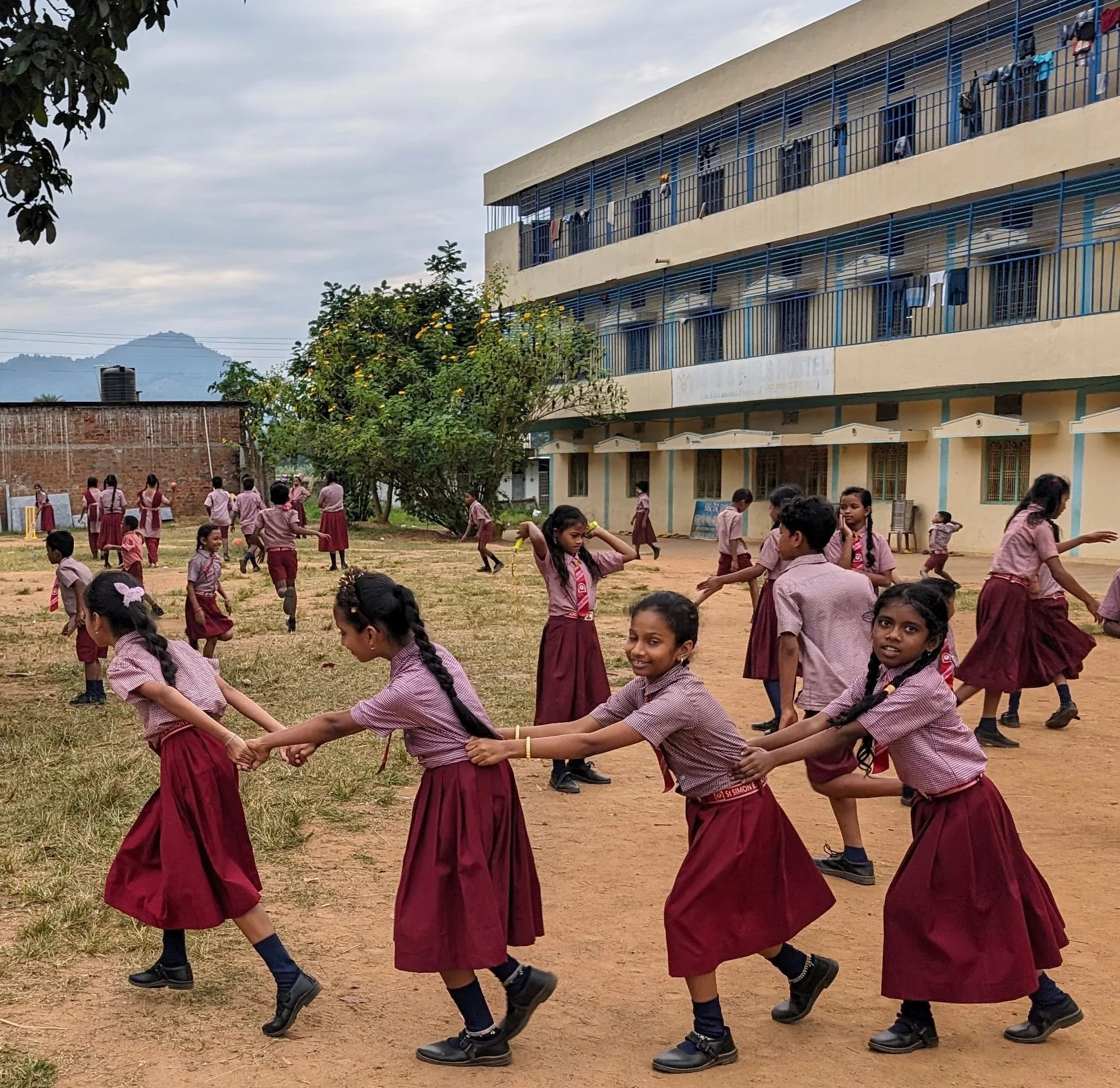
St. Simon's School
St. Simon’s School, located in the state of Odisha, is Helping Point’s largest project. The school was founded in 2002 and works to meet the urgent need for quality education in rural India. St. Simon’s School currently educates, feeds and cares for over 300 children, ranging in age from 4-16 years, primarily from the Dalit community (formerly the so-called “Untouchables"). Many of the students come from poor families who struggle to provide for them. Helping Point’s vision for St. Simon’s School is to offer a systematic English education to underprivileged children, with the hope that it will help to lift them, and their families, out of extreme poverty.
Helping Point employs a dedicated team of qualified teachers and support staff, many of whom come from the same region themselves and are committed to serving the students’ holistic development. By hiring these individuals, who are uniquely equipped to navigate issues faced by these children and their families, Helping Point provides much-needed employment opportunities to rural Indian communities. Both the teachers and staff members strive to provide a safe and loving environment for the young students, where they can thrive, learn and grow.
St Simon’s students routinely receive strong examination results, and many of them have gone on to college and university.

Community Centres
Community Centres
There are currently 10 Helping Point Community Centres (or “Daycare Centres”) operating in small towns and villages across the states of Andhra Pradesh and Odisha. The main purpose of the centres is to provide a higher quality of education for children who would otherwise have little chance to progress beyond primary education. In many of these regions, the local schools are underfunded and understaffed, making them poorly-equipped to meet the needs of their communities. There is a need for adequate educational opportunities for children living in rural areas, in order to provide them with better job prospects for the future and to give them a chance to break out of the cycle of poverty. In some cases, children as young as six or seven-years-old are required to work, rather than attend school, in order to help support their families. While the Community Centres provide local children with increased access to education, they also seek to meet the physical needs of their students through regular meals and health check-ups, relieving families of some of the pressures they face on a daily basis.
The Helping Point Community Centres seek to function as a part of the community; the staff members live in the village and some run the Centre out of their homes. They are continually building trust between people of different faiths, as the centres are often located in areas impacted by religious tension. Local people have been overwhelmingly thankful for the centres because of the hope that Helping Point is bringing to their communities.